What Is a Mixtape? Meaning, History, and Why It's Back
A mixtape is a handmade collection of songs, ordered with intent and given to one person. Here is the full history, from 1980s cassettes to the 2026 revival.
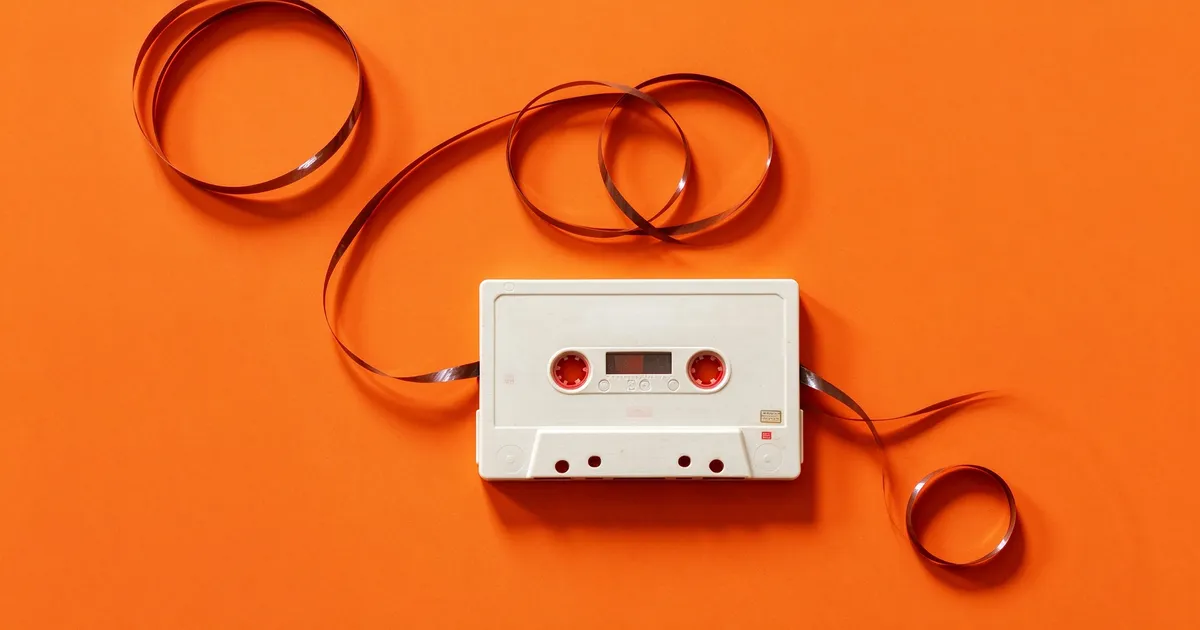
You have heard the word in a rap documentary. You have seen it in a playlist called “summer mixtape vol. 4”. If you were a teenager before 2005, you have held one in your hand. The word means all of those things at once, which is why the mixtape meaning shifts depending on who you ask.
So, what is a mixtape? Let’s take it apart. This post covers the original meaning, the history of the mixtape across cassette and CD, and the hip hop chapter. Then come the legal grey zones and the 2026 revival that is pulling the word back into the mainstream.
The short answer
A mixtape is a collection of songs put together by one person for another, in a deliberate order, on a medium you can hold. It’s a message made of other people’s music. The word started with cassettes and survived every format since.
That definition is doing a lot of work, so let’s unfold it. “Put together by one person for another” is the key part. A mixtape has a maker and a recipient. The songs are chosen on purpose, sequenced on purpose, and handed over as one object. A radio station is not a mixtape. Neither is an algorithm. The minimum requirement is a human who cared about the order.
The word has also lived a second life in hip hop, where it means something close to an unofficial album. We will get there. The two meanings share one core: music assembled by hand, outside the official system, for an audience of real people.
Where the mixtape came from
The story starts with the compact cassette, which Philips put on the market in 1963. Cassettes were cheap, re-recordable, and tough enough for a teenager’s pocket. By the 1970s, hi-fi systems shipped with two decks. The mixtape was born the first time someone hit record on deck B with a favorite record spinning on deck A.
Early mixtapes were often practical. A compilation of your best songs for the car. A party tape. A copy of an album you couldn’t afford. But the form found its real purpose in romance and friendship. You gave someone a cassette, and you were really giving them a carefully sequenced argument about your feelings. The medium forced care. You had to tape songs in real time, watch the level meter, and plan the running order so side A didn’t cut a song in half.
By the 1980s the mixtape was a folk art with unwritten rules. Don’t talk over the intro. Don’t put two songs by the same artist back to back. End side A strong, because that’s the last thing they hear before flipping. Thurston Moore of Sonic Youth called the mixtape the most widely practiced American art form. The film High Fidelity built whole scenes around making one. The full folk history is worth an evening, and Wikipedia’s mixtape page is a decent starting point.
When CD burners reached home computers in the late 1990s, the mixtape jumped formats and became the mix CD. Same ritual, shinier disc. Eighty minutes instead of 45 per side. No more taping in real time, which purists said made it too easy. They had a point. The CD-R era ran strong for about a decade, and it is the era this whole site is built around. We cover it in detail in how to make a mix CD.
How hip hop changed the word
While teenagers traded cassettes, New York DJs were building a second definition. In the late 1980s and early 1990s, DJs like Kid Capri and Ron G sold tapes of live blends, freestyles, and exclusives at barbershops and street corners. Rappers noticed. A tape moving out of a trunk could reach farther than any label’s marketing.
The mixtape became hip hop’s underground press. An unknown rapper could prove demand with a free tape, then walk into a label meeting with receipts. The blueprint case is 50 Cent. His 2002 mixtape “Guess Who’s Back?” built enough buzz to help earn him a deal with Shady and Aftermath, and “Get Rich or Die Tryin’” followed in 2003. Lil Wayne took the format to its peak in the late 2000s with tapes like “Da Drought 3” and “No Ceilings”. Many fans rank those releases above his official albums. Sites like DatPiff turned the scene into an economy of free downloads.
Why give music away? Three reasons. It built an audience no label could argue with. It let artists rap over borrowed beats without paying for clearance, because nobody sued over a free tape, mostly. And it bought credibility: the street found you before the industry did.
The format’s logic eventually bent the industry itself. Chance the Rapper won a Grammy in 2017 with “Coloring Book”, a streaming-only release he called a mixtape. The line between tape and album has been blurry ever since.
Mixtape vs album vs playlist
Three formats, three different jobs. Here is the honest comparison:
| Mixtape | Album | Playlist | |
|---|---|---|---|
| Who makes it | one person, usually unofficial | an artist with a label | anyone, or an algorithm |
| Licensing | often uncleared or free | fully licensed | licensed by the platform |
| Purpose | buzz, craft, or a gift | a commercial statement | convenience and mood |
| Length | whatever fits, 30 to 80 minutes | 35 to 60 minutes | unlimited |
| The order | the whole point | decided by the artist | shuffle at will |
The word gets slippery because rap mixtapes sit close to albums, and the handmade gift sits close to playlists. For the gift sense of the word, the closest modern relative is the shared streaming playlist. It is a weak relative. A playlist is infinite, editable, and free of consequences. A mixtape is finite, fixed, and finished. We laid out that argument in full in mixtape vs playlist.
Why were mixtapes illegal?
Sometimes they weren’t, and sometimes very much were. It depends on which mixtape, and what you did with it.
Making a mixtape as a private gift sat in a legal grey zone that most countries tolerated. Copying a song you owned onto a tape for a friend was rarely prosecuted anywhere. Selling that tape was a different matter. Street mixtapes were pressed by the thousand, sold for cash, and built on beats and samples nobody had licensed. That is straightforward infringement, and rights holders treated it that way. In 2007 the Atlanta DJ Drama was famously arrested in a raid over exactly this business. The charges eventually fell apart, but raids like it ended the era of selling unofficial tapes on street corners.
The legal pressure pushed the format somewhere interesting: fully free. Once a mixtape cost nothing, the calculus changed. Uncleared beats on a free tape were still technically infringing, but labels mostly looked away, because the buzz a hot tape created was worth more than a lawsuit. Free became the mixtape’s business model decades before free became the music industry’s whole model.
One footnote for the gift side of the word. When you make a virtual mix CD on this site, nothing is copied at all. Each track is a 30-second preview served straight from the Apple Music catalog. You are sharing a pointer, not a file, which keeps the ritual completely clean. Our burn a CD online post covers the details.
The 2026 revival: why Gen Z wants tapes again
Here is the twist nobody had on their 2005 bingo card. The mixtape is trending again, and the people driving it never owned a cassette deck.
Physical music media has spent the 2020s climbing back. Vinyl went first and loudest. Cassettes followed, growing from almost nothing into a real niche with dedicated pressing plants. CDs have joined them. Recent RIAA shipment data shows CD revenue up sharply, by more than 45 percent in the first half of 2026.
The reasons are not really about sound quality. They are about weight. A tape, a disc, and a handwritten J-card all take effort, and effort is the scarce thing now. Younger listeners describe wanting media they can hold, on purpose, away from an infinite feed. The mixtape is the purest version of that idea, because it is media a specific person made for a specific other person. Nostalgia cycles did the rest. A word that belonged to a millennial’s hi-fi system is now an aesthetic all over the short video platforms.
How to make a mixtape today
If reading this made you want to make one, you have three real routes.
- The cassette, for real. You need a deck, blank tapes, and patience. Charming, expensive, deeply impractical.
- The burned CD. The classic 1999 move, still alive. You need a burner and a blank disc, and our guide to burning a CD without a CD drive covers how to get both.
- The online mixtape. No hardware at all. We compared five ways to make a mixtape online in a separate guide. One of them is this site: a free virtual mix CD you build in a browser, burn with full drive sound effects, and send as a single link.
That third route is the one we built Burn CD for. Click the spinning blank disc. Search real songs. Burn, write a note, send the link. The ritual, minus the hardware.
Frequently asked questions
How many songs are on a mixtape?
A C90 cassette held about 45 minutes per side, so a two-sided tape ran 20 or more songs. Plenty of people filled one side and called it done. A mix CD holds about 80 minutes, or 18 to 20 modern pop songs. There was never an official count. The limit of the medium set the length, and we do the full math in how many songs fit on a CD.
Is 7 songs a mixtape or an album?
There is no fixed line. In industry shorthand, a release under roughly 10 tracks or 30 minutes reads as an EP or mixtape. Anything longer reads as an album. What actually separates them is packaging: albums are official, licensed, and sold. Mixtapes are looser on all three.
What does mixtape mean in rap?
In rap, a mixtape is an unofficial release used to build buzz. It is usually free, often built on borrowed or uncleared beats, and distributed straight to fans rather than through a label. Think of it as the demo tape’s louder successor.
Is a mixtape the same as a playlist?
No. A playlist is an open, editable container for songs. A mixtape is a finished object with a maker, a recipient, and a fixed order someone thought hard about. One is a tool. The other is a gesture. The full comparison lives in mixtape vs playlist.
Do people still make mixtapes?
Yes, along all three routes above. Cassettes and CD-Rs survive as small crafts, and the online version keeps growing. Some things are too good at saying “I thought about you” to die.